Glacial Till
Case E, Hoffman A , Mode HP, Rai T. (2026). “Glacial Till”. Roadsides vol. 15:28-42. https://doi.org/10.26034/roadsides-202601504
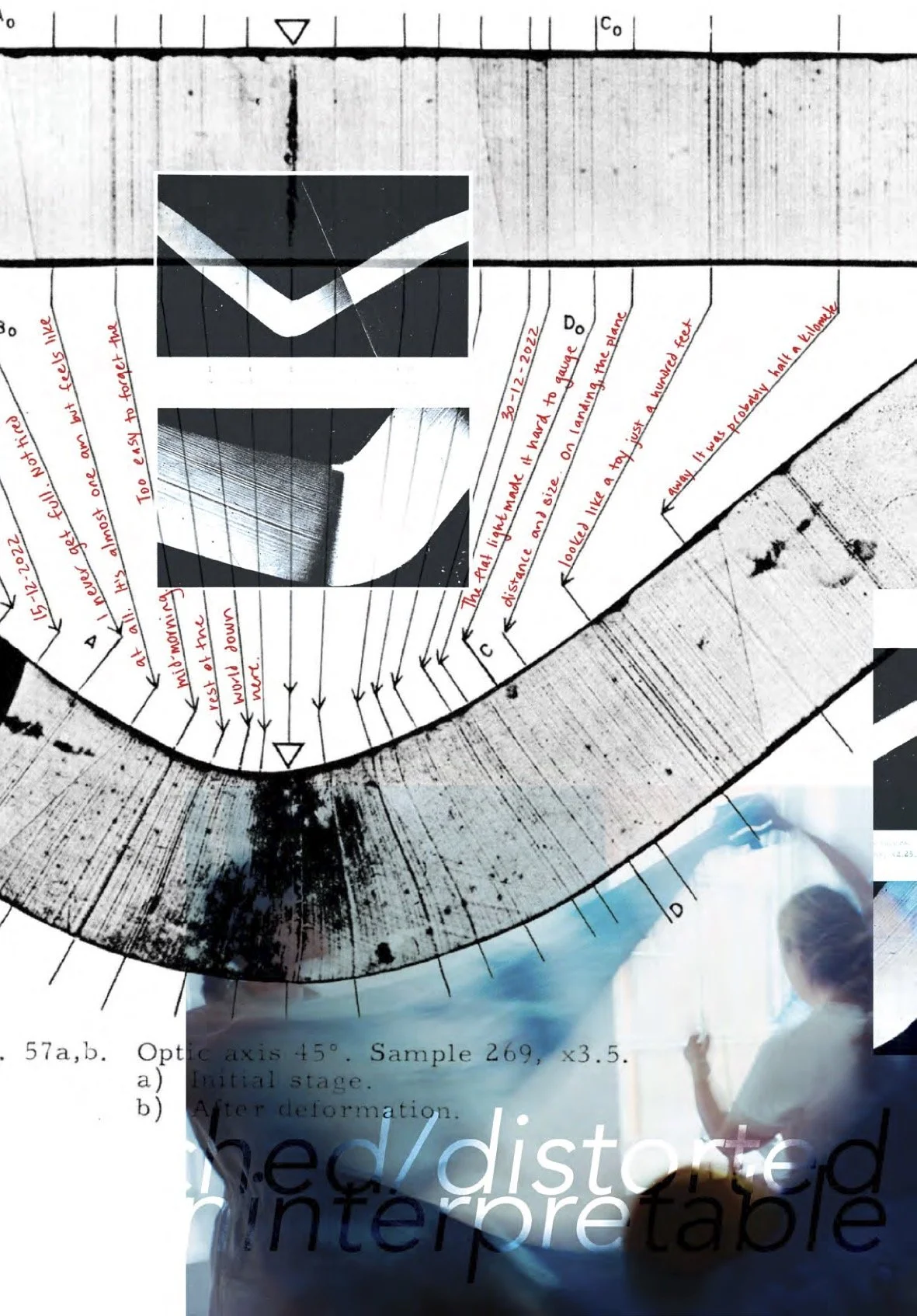
In this essay, which draws from Renee Gladman’s “prose architectures” (2017), we produce a visual entanglement of artistic and scientific concepts, processes, infrastructures and sources. The content—photographs, video stills, journal excerpts, glaciological data, sketches and fragments from performance texts—relates to the interaction of human and glacial bodies over vast temporal and spatial scales. The images begin as clearly ordered and described, sometimes extremely technically, clarifying meaning to some audiences and obscuring it to others. Then, slowly, like the rocky sediment underneath a glacier, the content is reworked: repeated, glitched and manipulated, with Case’s handwritten text from an Antarctic field season, Rai’s poetry and spoken word, logistics contracts and quotations. From and within these interactions, material is moved, shaped and mixed. An unsorted, unstratified glacial till emerges, assembling, moraine-like, into this collaboration.
Glacial Hauntologies: integrated art-science explorations of the past, present, and future of Earth’s ice sheets and glaciers
Case E, Hoffman A , Mode HP, Rai T. “Glacial Hauntologies: integrated art-science explorations of the past, present, and future of Earth’s ice sheets and glaciers”. Chapter in Traces of Extinction. University of Tartu Press and Uniarts Helsinki Press. Anticipated publication in 2026.
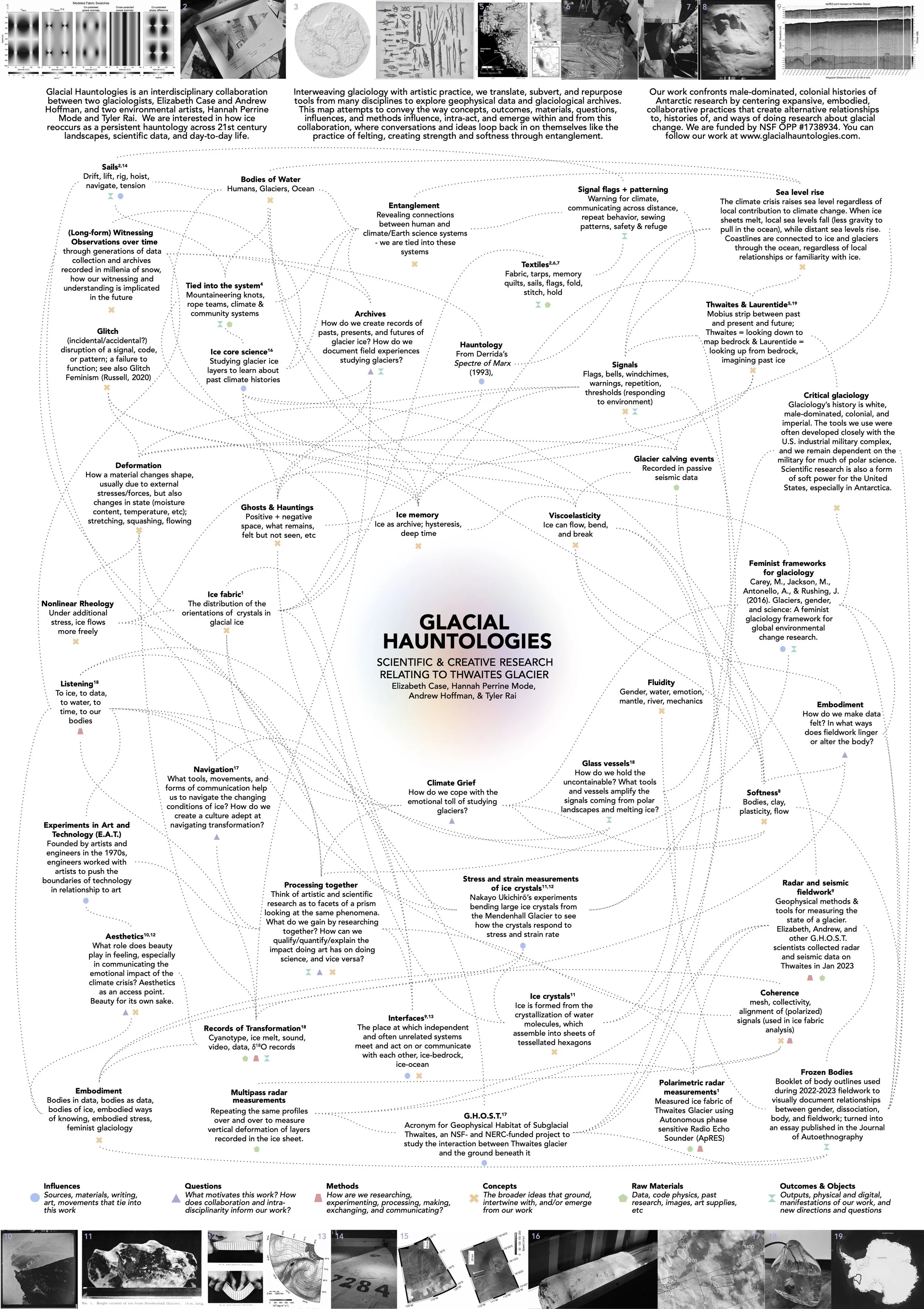
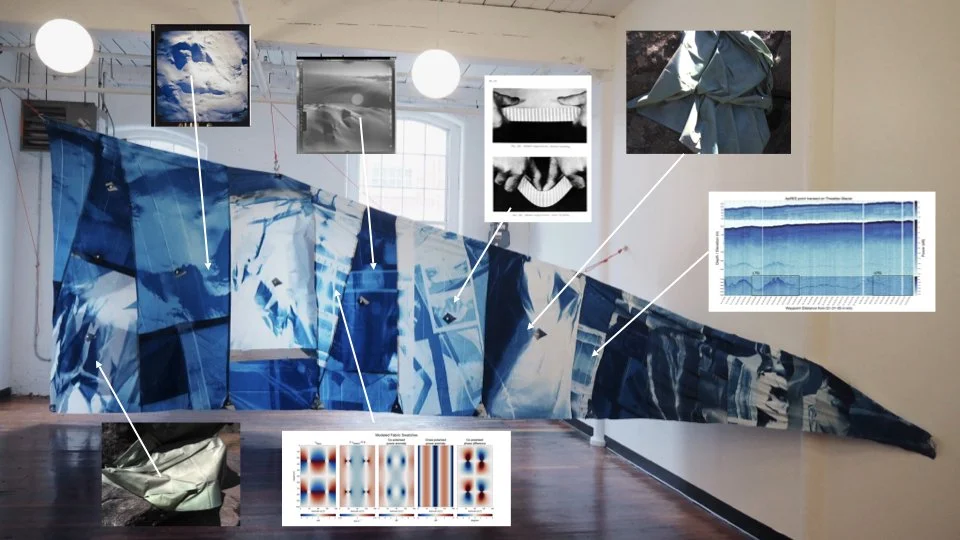
This paper is a re-turning, that is, turning over and over again of Glacial Hauntologies, an art-science collaboration between Elizabeth Case (they/she), Andrew Hoffman (he/him), Hannah Perrine Mode (she/they), and Tyler Rai (she/they). For convenience, we will refer to ourselves as artists (Mode, Rai) and scientists (Case, Hoffman), although the crux and strength of our collaboration is that we each regularly forage across disciplines. Through this collaboration, we explore the history, science, relevance, meaning, futures, and aesthetics of glaciers and ice sheets…
The tensions that we grapple with in this collaboration reflect tensions embedded in how today’s society relates to glaciers. We explore how to simultaneously hold responsibility for destabilising the climate with the natural cyclicity of geologic systems, the mirroring between human bodies and icy bodies, the entanglement between human and geologic timescales, and the understanding that comes from remote sensing versus embodied ways of knowing.
Medial Moraine: Converging Art-Science Practices and Place-based Pedagogies in Glaciology
Case E and Mode HP. “Medial Moraine: Converging Art-Science Practices and Place-based Pedagogies in Glaciology”. Decolonizing Naturecultures: Collaborations between art and science in the Arctic, Routledge. Anticipated publication in 2027.
A medial moraine forms when two glaciers merge. Throughout their slow seep from peak to sea, glaciers accumulate rocks and sediments along their edges from rockfalls and avalanches. If two glaciers meet, the accumulated debris forms a single seam, a place marking the coming-together-of.
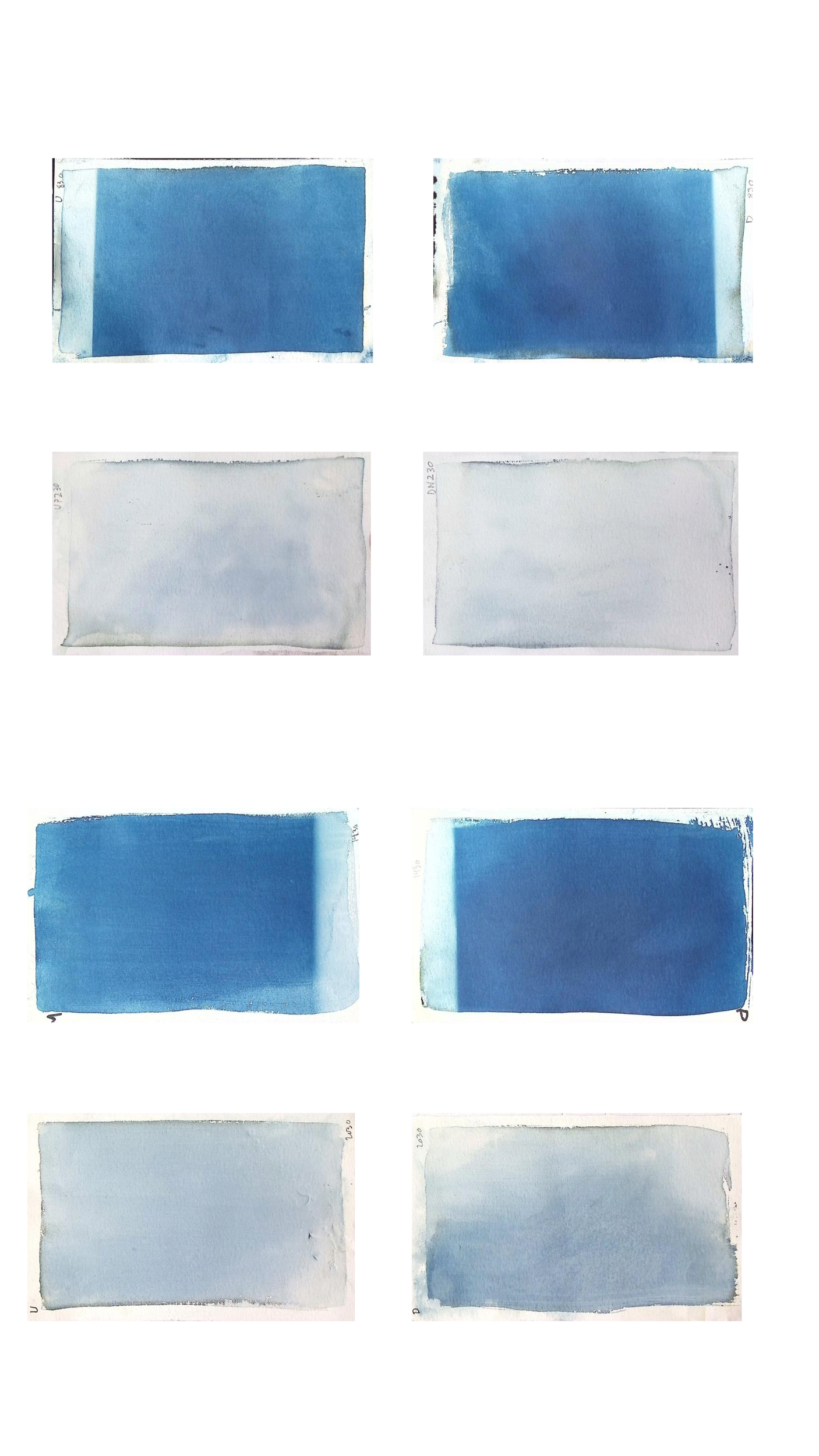
This paper describes one such medial moraine: the ongoing collaboration of a visual artist and a glaciologist teaching and practicing art-science on the Juneau Icefield, an interconnected system of glaciers on Lingít Aaní (Tlingit Land) that straddles the border between Alaska, USA and British Columbia, CA. We (the authors, Dr. Elizabeth Case and Hannah Perrine Mode) use the identifying terms ”scientist” and “artist” loosely, primarily as markers of the origin of the debris that form the moraine that is our working relationship. Through our work together—teaching, art making, organizing, friendship—our intellectual, emotive, and embodied ways of doing and thinking have thickened, a kind of diagenesis that binds without homogenizing. While we still draw from, and reside primarily in, our disciplinary origins, we both readily engage with, participate in, and make use of multiple, diffracting epistemologies. Reflecting on this long-term collaboration between us as educators and researchers working at the intersection of environmental art and glaciology, we explore how our individual and collaborative practices have evolved over the last decade and impacted the program we teach in as a whole.
European Geophysical Union (2025)
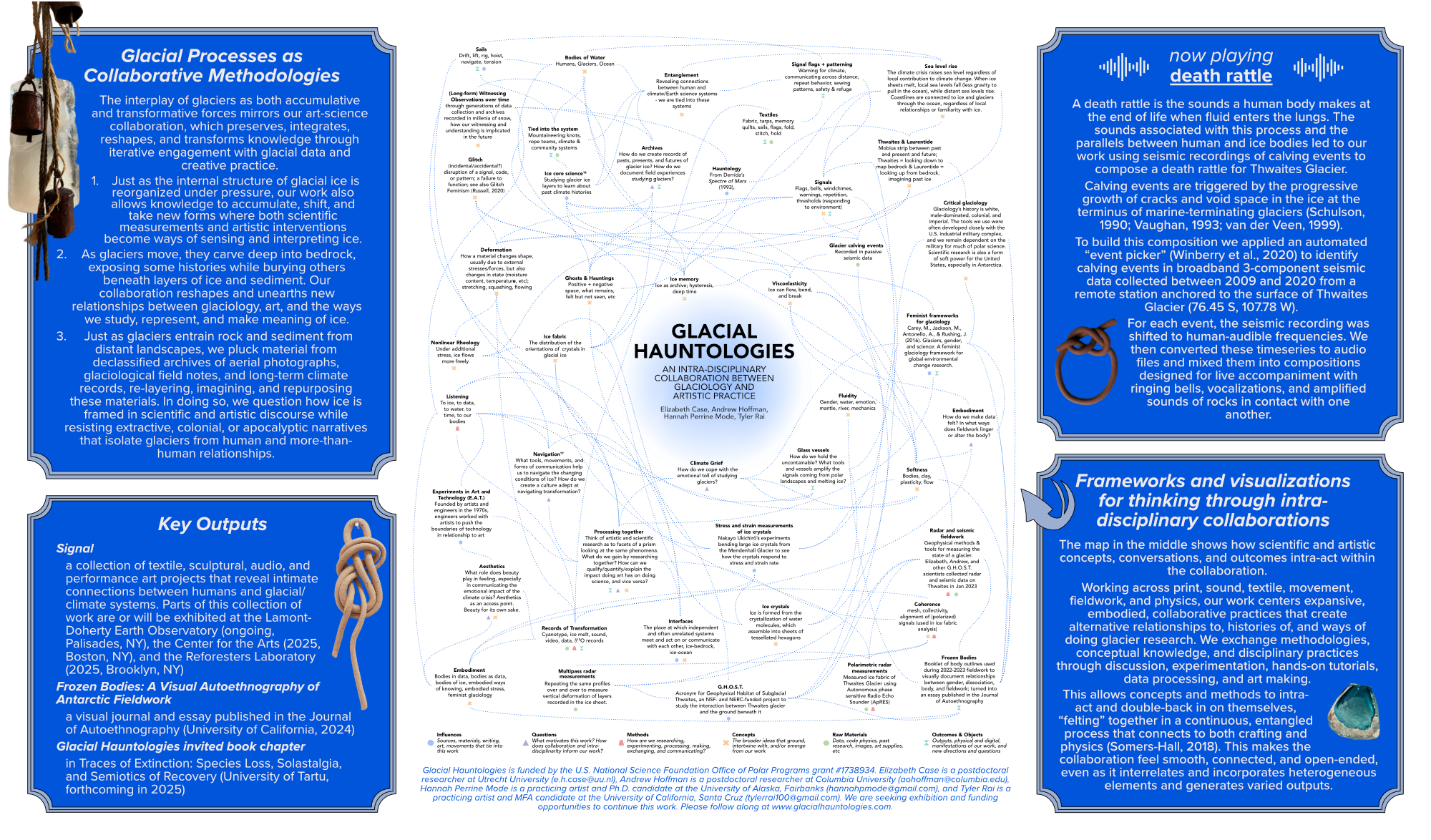
Case E, Hoffman A, Mode HP, Rai T. (2025). “Glacial Hauntologies: an intra-disciplinary collaboration between glaciology and artistic practice”. European Geophysical Union. EGU25-13671.
Society for Artistic Research (2024)
Case E, Hoffman A, Mode HP, Rai T. (2024). “Glacial Hauntologies: scientific and creative research relating to Thwaites Glacier”. Society for Artistic Research.